SBA Rule Change 2026: What Green Card Business Owners in South Florida Must Know
The SBA Rule Change That's Already Reshaping Small Business Capital in South Florida
If you run a service business in Miami — a restaurant, a gym, a home services company, a construction outfit — and you or a co-owner holds a green card, there's something you need to know right now. The SBA changed the rules. And the consequences are already showing up in deals.
SBA 7(a) loan volume is down 18% in the first five months of FY2026. That's not a blip. It's a direct result of one of the most significant eligibility shifts the program has seen in years — and in a market like South Florida, where immigrant entrepreneurs power a huge share of the local economy, the impact is hitting harder than the national headline suggests.
What Actually Changed — and Who It Affects
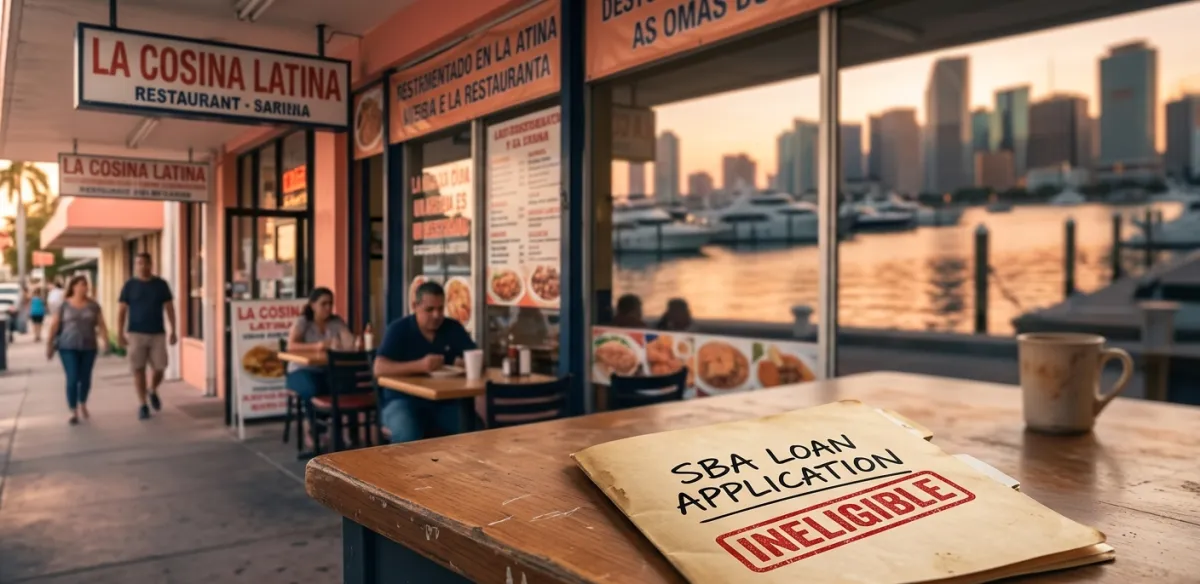
Effective March 1st, 2026, the SBA now requires 100% U.S. citizen ownership to access its 7(a) and 504 loan programs. Previously, businesses with up to 5% foreign national ownership could still qualify. That threshold is gone. Green card holders — lawful permanent residents who have built businesses here over years or decades — are no longer eligible. Any foreign national equity stake, even a minor one, disqualifies the entire business.
As of April 1st, the restriction expanded further to cover Surety Bond and Microloan programs as well.
To understand the scale: the SBA backed over $45 billion in loans across more than 85,000 businesses in FY2025. Historically, immigrants own roughly 1 in 5 small businesses in the United States — a figure that skews even higher in South Florida's hospitality, construction, and personal services sectors. Even a conservative estimate puts thousands of previously eligible businesses in this market now locked out of the lowest-cost, longest-term capital available to them.
Here's what that looks like in a real file: A restaurant owner in Miami-Dade — seven years in business, clean monthly revenue north of $150K, looking to fund a second location buildout. He's a lawful permanent resident. His wife, who holds a small equity stake in the LLC, is on a visa. Two months ago, this was a strong SBA 7(a) candidate. Today, they don't qualify. Not because the business changed. Not because the financials changed. Because the rules did.
Those borrowers don't disappear. They need capital. They just have fewer places to get it — and the options that remain come at a higher cost.
Why This Creates a Capital Trap — and the Mistake Most Owners Make
Here's where the real damage happens, and it's not the ineligibility itself. It's what owners do next.
When SBA is off the table, the path of least resistance is to go directly to an alternative lender — an MCA provider, a short-term working capital shop, a fintech that approves in 24 hours. And there's nothing inherently wrong with those products. Speed and flexibility have real value. But the structure of what you sign in that moment can quietly determine whether your business qualifies for better financing 12, 18, or 24 months from now.
The mistake I see constantly: owners treat the capital decision as a one-time transaction rather than a position they're taking in a longer game. They take the first offer they receive, sign without fully understanding the repayment mechanics, and lock themselves into daily or weekly debits that look manageable at month one but strain cash flow by month four.
Worse, some end up stacking — adding a second or third position on top of an existing advance because they need more runway. Every stack makes the file messier. And a messy file makes it harder to clean up and qualify for the bank or SBA loan they actually wanted when they open that next location or start thinking about a future sale.
At Bayside, we regularly talk to owners who came in looking for help consolidating a position they didn't fully understand when they signed it. The cost was higher than they realized. The daily drafts were bleeding cash flow. And their bank eligibility — which they thought they were protecting — had already taken a hit.
The downstream consequences matter: predatory or poorly structured short-term debt can suppress net income on your tax returns, inflate your debt service coverage ratio in the wrong direction, and flag your bank statements in ways that make conventional underwriting harder. If you're planning an exit, a partner buyout, or a line of credit for growth in the next few years, the capital structure you carry into that conversation matters more than most owners realize.
What to Do Instead
Being SBA-ineligible today doesn't mean you're stuck with bad options. It means you need to be more deliberate about what you take and why. Here's how to think about it:
1. Understand your full cost of capital — not just the rate.Alternative lenders often quote factor rates, not APRs. A 1.35 factor rate on a 12-month advance is not 35% interest. It's significantly higher when annualized. Before you sign anything, know the actual total payback, the daily or weekly draft amount, and what that does to your monthly cash flow.
2. Match the structure to the use of funds.Working capital for a specific, short-term need — a seasonal inventory buy, a marketing push, a one-time equipment repair — is a different conversation than funding a buildout or expansion. The former can justify a shorter, higher-cost advance. The latter almost always warrants a longer-term structure.
3. Protect your bank and SBA eligibility for later.Even if you can't access SBA today, you may be eligible in the future — whether through a citizenship change, an ownership restructure, or a policy shift. Don't take a structure now that permanently damages your file. Ask your advisor specifically: will this show up on my bank statements in a way that hurts future underwriting?
4. Get a second opinion before you sign.If you've already received an offer, have someone review it before you commit. Not every offer is predatory — but some are. The fine print on renewal clauses, prepayment terms, and stacking restrictions matters.
5. Think about capital as a sequence, not a single decision.The right move today should leave your options open tomorrow. If you're building toward a bank loan, a buyout, or an exit, work backward from that goal and structure your current capital accordingly.
The SBA rule change is real. The volume decline is real. And for immigrant-owned businesses in South Florida, the pressure to make a fast capital decision — without a clear picture of the consequences — is very real right now.
Capital is a tool. The structure you take today should be informed by where you're headed, not just what's available in the moment.
If you're navigating this and want to understand your options before you commit to anything, we're happy to walk through it with you — no pressure, just a clear-eyed look at what fits your business and what doesn't.
Sources: U.S. Small Business Administration (March 2026), Structured Finance Industry Group (March 2026)